
Content plan vs content brief: what each one does, and why you need both

A plan without briefs is a calendar of guesswork. A brief without a plan is a well-written post chasing a keyword nobody searched for. Those two failures are the reason the content plan vs content brief debate keeps coming up: most teams run the workflow backwards and then wonder why traffic is flat. The short answer is that a content plan decides what to write and when, while a content brief decides how each individual post gets written. They overlap, they depend on each other, and neither one works in isolation. This guide walks through what each document actually decides, where they collide, and the order that makes both of them earn their keep.
Table of contents
- What a content plan actually decides
- What a content brief actually decides
- Where the two overlap (and where they fight)
- The right order: plan, then brief, then write
- What a single plan-to-publish entry looks like
- How to keep the plan and the brief from drifting apart
- Frequently asked questions
- Sources
What a content plan actually decides
A content plan is the editorial map. It looks ahead over weeks or months and answers four questions before any writing starts: which query each post will target, what the reader expects to find, when the post is scheduled to go live, and which post it links to once it is published. Done well, the plan is a dated list of decisions, not a list of blog ideas.
The plan is where you settle the scope. You pick the target query for every entry, decide whether the intent is informational, commercial or transactional, and slot a publish date. You also note the supporting terms each post should cover, the internal pages it should link to, and the format — guide, comparison, tutorial, listicle — that matches what the query is asking for. The seo content plan framework makes this concrete: one target query per post, intent before word count, and nothing publishing without a date.
What the plan does not decide is the prose itself. It does not pick the headline that will run on the page, the meta description shown in the search results, the structure of the post, or the sources the writer will draw on. Those belong to the brief.
Two side notes that matter in practice. First, a plan is not a content calendar in disguise. A calendar is the schedule view — dates, owners, status — while a plan carries the reasoning behind every entry. Second, the SEO content planning process is iterative: a plan that is never updated after posts go live drifts quickly, because queries that worked in month one may not be the ones driving impressions in month three.
What a content brief actually decides
A content brief is the instruction set for one post. It takes the single target query chosen by the plan and translates it into a writing job: the angle, the audience, the outline, the sources, the format, the meta title and description, and the internal links the post should point to.
The brief is where shape happens. It picks the headline that the post will actually run with, settles whether the piece is a how-to, a comparison or a list, lists the supporting questions the post should answer alongside the primary one, and names the sources the writer is expected to cite. A strong brief also fixes the word count range, the reading level, and the call to action — or the deliberate absence of one. Most writers and editors treat the brief as the contract for the piece: if the post deviates from it, the deviation should be visible and justified.
What the brief does not decide is whether the post deserves to exist in the first place. A brief built around a query nobody is searching for is a polished way to waste a writer's week. That is exactly the kind of mistake the plan is meant to catch upstream. The brief inherits the target query and the intent from the plan; it should not invent either.
Where the two overlap (and where they fight)
The overlap is real and it is the source of most confusion. Both documents touch the target query, both touch the audience, and both touch the format. A plan that says "post 14: a guide for first-time managers hiring freelancers" and a brief that says "title: how to hire your first freelance writer, audience: ops lead at a 20-person company" are obviously pulling from the same data. The question is which document owns which decision.
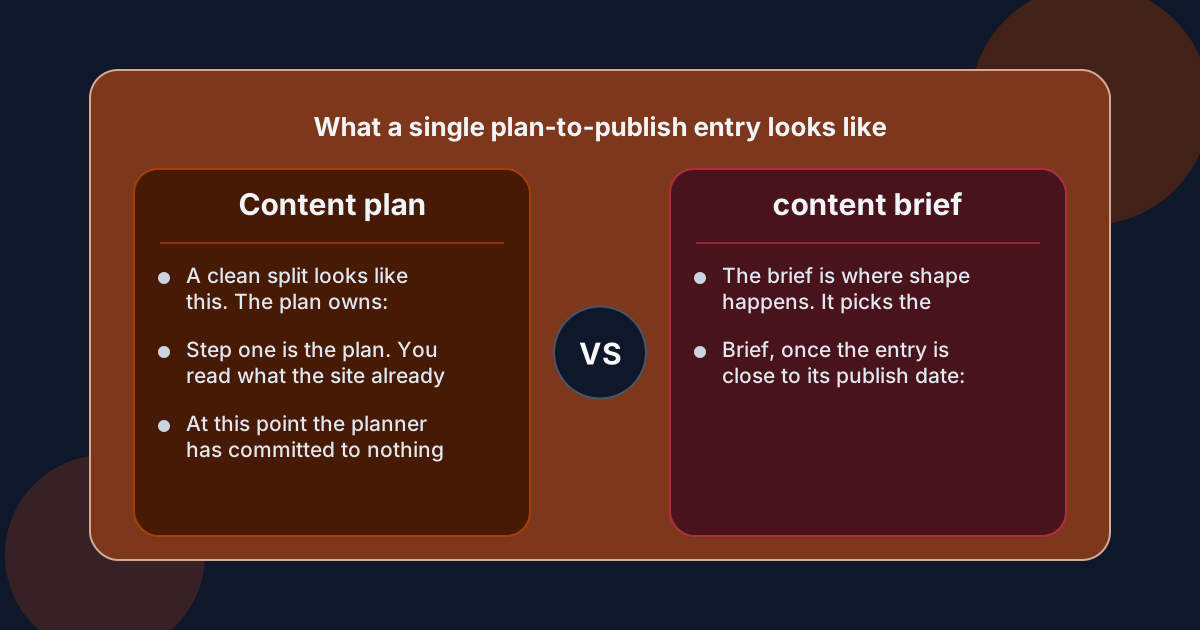
A clean split looks like this. The plan owns:
- the target query and intent for every post;
- the publish date;
- the supporting terms the post should also cover;
- the internal links the post will receive once published.
The brief owns:
- the working headline, meta title and meta description;
- the outline, structure and format;
- the sources, examples and quotations;
- the tone, length range, and any product or positioning notes.
Where they fight is when both documents try to do the same job. A plan that contains full outlines for every post has stopped being a plan and turned into a stack of briefs — and it will be wrong in the same places every plan is wrong, because the planning layer never gets a chance to fail fast and cheaply. A brief that picks its own target query, independent of the plan, has broken the chain: the post may be excellent and still answer a question the audience never asks.
The two also fight on timing. Plans are usually refreshed monthly or quarterly. Briefs are usually built per post. When the brief is written before the plan has settled the query, the writer ends up chasing a moving target; when the plan is updated after briefs have already been written, briefs go stale before the post is published. The cure is sequencing, not more documentation.
The right order: plan, then brief, then write
The plan-then-brief-then-write workflow exists because each step is cheaper to change than the next. The plan-then-brief workflow is the order most teams skip and most agencies bill against anyway.
Step one is the plan. You read what the site already covers, find the queries it is missing, and turn those gaps into dated posts. Each entry in the plan gets one target query, an intent, supporting terms, the format and the internal page the post will link to. Nothing here is prose yet, and nothing here is committed to a writer.
Step two is the brief. Once a post is close enough to its publish date to be worth the writer's time, you turn the plan entry into a brief. The brief inherits the target query and the intent from the plan, then adds the outline, headline, meta title, meta description, sources and links. At this point, if the writer disagrees with the brief, the disagreement is visible — and the planner can either update the brief, move the publish date, or pull the post from the plan entirely.
Step three is the write. The writer follows the brief, the editor checks the post against it, and the post goes live on the date the plan set. After publication, the plan is updated with what actually happened — which post indexed, which post earned impressions, which post needs to be revised — so the next round of briefs inherits a better plan.
That order is also why for agencies running multiple client blogs the same workflow applies per site: per-client domains, per-site calendars, and per-site search data, so the plan-to-brief chain never bleeds across clients.
What a single plan-to-publish entry looks like
 A worked example is usually more useful than another definition. Take one entry, end to end, the way it should sit in a real editorial system.
Plan entry, before the brief exists:
- Target query: content plan vs content brief
- Search intent: commercial
- Supporting terms: content plan vs content calendar, what is a content plan, SEO content planning process, plan-then-brief workflow
- Format: comparison guide
- Internal links in: /seo-content-plan, /for-agencies
- Internal links out: the blog index and a relevant supporting page on the site
- Publish date: set when the entry is added to the calendar
At this point the planner has committed to nothing beyond a query, a shape and a date. The post can still be cut, retargeted or moved without costing anyone a writing day.
Brief, once the entry is close to its publish date:
- Working headline: "Content plan vs content brief: what each one does, and why you need both"
- Meta title: Content plan vs content brief
- Meta description: A content plan decides what to write; a content brief decides how to write it. Here is where the two overlap, where they fight, and the order that makes both work.
- Outline: the six H2s the post has to land
- Sources: authoritative pages that currently rank for the target query, plus relevant pages on the site
- Length range: about 1,500 words
- Notes for the writer: front-load the answer in the first 150 words, use the primary keyword in an H2, keep paragraphs under four sentences
After publication, the plan entry is updated with the actual outcome: indexed or not, impressions over the first 30 days, average position, and whether the supporting terms picked up visibility of their own. That data feeds the next round of planning.
The point of running one entry end to end is not the paperwork — it is that the plan entry can be argued about in five minutes, the brief can be argued about in thirty, and the post itself takes hours. Cheap decisions stay cheap.
How to keep the plan and the brief from drifting apart
Drift is the silent failure. The plan says one thing, the brief says another, the post ships and nobody notices until traffic reports come back flat. Five habits keep the two documents honest.
Lock the target query in the plan and forbid the brief from changing it. If the writer wants to retarget, the change goes back through the plan, not around it. Otherwise the post is no longer the post the plan promised.
Refresh the plan before you refresh the briefs. A monthly review of what published, what indexed and what earned impressions will surface queries that have stopped working and queries that have started to. The next batch of briefs inherits that update; briefs written against a stale plan are wasted.
Keep one source of truth for internal links. The plan should name the pages each post points to, and the brief should quote those names verbatim. If the brief invents new links, the post ends up with a link graph the planner never agreed to.
Date everything. The plan carries publish dates, the brief carries a draft deadline, and both are visible to the writer. Posts that ship late quietly break the calendar; posts that ship on a date nobody owns quietly break reporting.
Treat the post-publish update as part of the plan, not as a separate task. The plan entry is not "done" when the post goes live; it is done when the post has been measured and the next plan has absorbed the result. Without that loop, the plan is a wish list and the brief is a guess.
A plan and a brief are not competing documents. They are two stages of the same editorial decision, and the workflow only works when the order is plan, then brief, then write — and the loop closes once the post has been measured.
Frequently asked questions
What is the difference between a content plan and a content calendar?
A content plan carries the reasoning — which query each post targets, what intent it serves, which format it takes, and which posts it links to. A content calendar is the schedule view: dates, owners and status. The plan tells you why a post exists; the calendar tells you when it ships. Most teams need both, but the plan is the one that does the strategic work.
Is a content brief the same as a content plan?
No. A content brief is the instruction set for one specific post: outline, headline, meta data, sources, internal links, length. A content plan is the dated list of every post the site intends to publish, with a target query and intent for each. The brief inherits the query and intent from the plan and adds the writing-level detail the writer needs.
What is a content plan in SEO?
In SEO, a content plan is the editorial map for organic search: one target query per post, the search intent behind it, the supporting terms the post should also cover, the format the query is asking for, and a publish date. The point of the plan is to decide what to write and why before the writing starts, so the post has a chance to rank for the query it was built around.
What goes into a content brief?
A solid content brief carries the target query and audience (inherited from the plan), the working headline, the meta title and meta description, a three-to-six heading outline, the format and length range, the sources the writer should cite, the internal links the post should include, and any tone or positioning notes specific to that post.
What is the right order: content plan, brief, then write?
Plan first, brief second, write third — and update the plan after the post is measured. The order matters because each step is cheaper to change than the next. A plan entry can be retargeted in minutes, a brief in under an hour, a finished post in half a day. Running the steps out of order is how teams end up with a well-written post chasing a query nobody searched for.