
Writing an SEO content outline that ranks: structure, entities and on-page intent

Table of contents
- Key takeaways
- What does a good SEO content outline actually include before the draft starts?
- How do you read the SERP to extract the real intent behind a target query
- Structuring H2s and H3s around entities, not just keywords
- How long should an SEO outline be, and what sections are non-negotiable
- SEO content outline vs full brief: when each one saves you a rewrite
- How to keep the cadence without becoming the bottleneck
- Frequently asked questions
- Sources
Key takeaways
- An SEO content outline is a structural decision, not a writing scaffold: the query, the intent, the entities and the heading tree are settled before any draft is written.
- The first job is SERP intent analysis: read the top ten results as evidence of what Google already considers a complete answer to the query.
- Build H2 and H3 headings around entities and the sub-questions those entities raise, never around a single keyword repeated at every level.
- A content brief sets the strategic frame (audience, goal, query, tone, competitors); the outline is what the writer actually follows on screen.
- Keep the outline short enough to scan on one screen — three to six H2s, every section earning its place by answering one sub-question the SERP has already paid for.
What does a good SEO content outline actually include before the draft starts?
A good SEO content outline is the document a writer can put beside the keyboard and follow from the first sentence to the last without checking anything else. The eight fields an entry on a content plan carries are listed on What an SEO content plan should contain: the target query written the way people type it, the search intent classified as informational, commercial or transactional, three to six H2 headings that map directly to the sub-questions in the search results, and the supporting terms the post should also answer. The outline adds the entities the post has to mention by name, the meta title and description written for the snippet, the internal pages the post will link to, and the format and depth the reader is asking for — guide, comparison, tutorial or listicle.
If a section's heading can be removed without anyone noticing it is missing, it is not earning its place. The outline is what enforces that test before the draft hides it. For a freelance writer handling multiple briefs a week, the brief is what the editor sent; the outline is what the writer hands back, and the gap between the two is where most revision cycles start.
How do you read the SERP to extract the real intent behind a target query
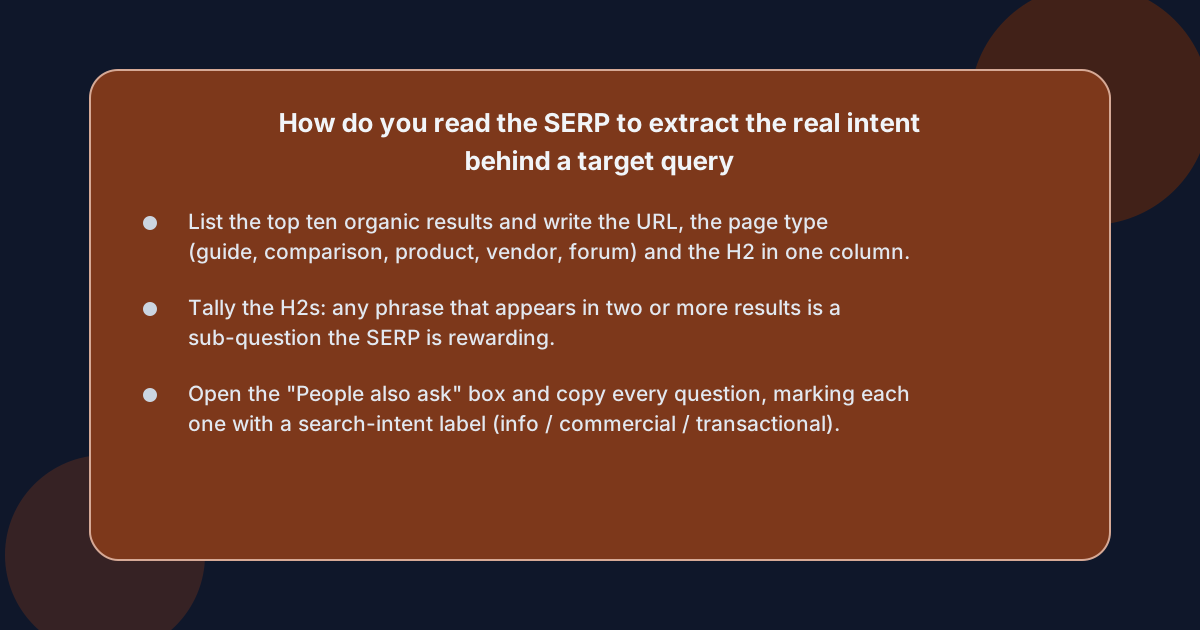 SERPs are evidence, not decoration. Ten blue links and ten sets of headings are ten independent guesses at the same query, and the headings they agree on are the sub-questions your outline has to answer. Open the top ten results for the target query, copy the H2 and H3 headings into a single document, and any phrase that appears more than twice is almost certainly a sub-intent the algorithm already rewards.
Match the dominant format, not the dominant word count. A commercial query returns product pages, comparison tables and pricing pages even if informational guides technically rank — write the commercial version, not the longer-looking guide the editor noticed. Match intent with the format that is already paying for itself on the page.
SERP-reading checklist (work it top to bottom for every target query)
- List the top ten organic results and write the URL, the page type (guide, comparison, product, vendor, forum) and the H2 in one column.
- Tally the H2s: any phrase that appears in two or more results is a sub-question the SERP is rewarding.
- Open the "People also ask" box and copy every question, marking each one with a search-intent label (info / commercial / transactional).
- Note the dominant page type across the top ten — that is the format your post has to match, not the average word count.
- Write one line per PAA question: which H2 on your outline will answer it. Any PAA question with no H2 owner gets a heading or gets cut.
What is the fastest way to spot intent drift in the SERP?
Look at the snippets, not just the rankings. If "People also ask" boxes cluster around how to and what is, the intent is informational; if they cluster around best, vs or pricing, it is commercial. If the top result is a product page, a cart or a signup flow, intent is transactional even when the query looks informational on paper. Intent reads off the SERP, not off the keyword.
Which SERP signals beat the keyword tool on this step?
The three signals worth more than any volume number are the headings the top ten pages share, the "People also ask" questions those pages answer, and the sites that dominate (Wikipedia and Britannica for definitions, vendor sites for product queries, forums for problem-solving queries). A keyword tool says a term gets 4,200 searches a month; the SERP says what those searchers actually wanted when they typed it. Google's own documentation — In-Depth Guide to How Google Search Works and the SEO Starter Guide: The Basics — frames ranking around matching what the searcher came for, which is the same test the SERP-reading checklist above runs against each result.
Structuring H2s and H3s around entities, not just keywords
H2 structure for SEO is built from entities, not from a single keyword sprinkled through every heading. An entity is a recognisable thing — a concept, a tool, a regulation, a person, a process — that the search engine can place in its knowledge graph and connect to other entities on the page. A heading that repeats the target keyword at every level is not an outline, it is a slot machine: each section is the same slot, and the post reads like the same answer five times.
A workable rule is one entity per H2, named plainly, with the H3s as the sub-questions that entity raises. For a post on writing an SEO content outline, the entities the SERP already pays for are the outline itself, the SERP analysis step, the content brief, the entities layer, and the drafting checklist — each one a noun phrase a real reader would type, each one carrying one section of the argument. Cover them in the order a reader would encounter them, not the order an old template suggested.
Should every section mention the same main keyword?
No. Mentioning the target phrase in two or three H2s is enough; stuffing it into every heading makes the page read like a list of the same item with different adjectives. Search engines trace entities across a page, and a heading like "How to read the SERP for intent" carries SERP intent analysis as cleanly as if the words were pasted in, with prose a human would actually want to read. The keyword is for the page; the entities are for the headings.
How long should an SEO outline be, and what sections are non-negotiable
An SEO outline is one page, long enough to read in one sitting and short enough to fit on one screen. Three to six H2 headings, two to four H3s per H2, and a list of the entities and source links the draft will need. Anything longer has stopped being an outline and started being a brief that has eaten itself.
The sections that are not optional are the meta title and meta description, the internal and external links the post will carry, and a one-line note on the format and depth the SERP demands. Without those four, an "outline" is really just headings, and headings without metadata do not survive a handoff to a second writer. A useful outline answers four questions for the writer: which query wins, what format the SERP rewards, which entities must be on the page, and which links the draft will carry.
Is there a template that actually holds up across niches?
The same eight fields that a content plan row holds at What an SEO content plan should contain give a template that survives most briefs: target query, intent, format, three to six H2s by entity, two to four H3s per H2, meta title and description, internal and external links, and a list of entities the post should mention. It is not a magic document; it is a checklist that forces the structural decisions out of the draft and onto a page where they can be argued about cheaply. The same shape works for a how-to, a comparison and a definition post, with only the format and the depth changing.
SEO content outline vs full brief: when each one saves you a rewrite
A content brief covers the strategic frame: the audience, the goal, the query, the tone, the competitor set, the publication date. An outline is the structural plan that follows it: the headings, the sub-points, the data, the sources, the entities. One is what the strategist hands the editor; the other is what the editor hands the writer. Treating them as the same document is the most common reason briefs come back with "this doesn't match what I searched."
Use the brief when the project is new, the audience is unfamiliar, or the goal has to be argued about before anyone writes. Use the outline when the strategic frame is already agreed and the only question left is which headings earn a place on the page. A long rewrite at draft stage is almost always a missing outline inside a complete brief.
What goes into a brief that does not belong in an outline?
Audience definition, the business goal, the tone and voice notes, the competitor set, and any legal or compliance constraints the writer needs to know before the first heading is written. None of those belong on the outline page, because none of them change what the writer types next. Putting them on the same document blurs the two jobs and produces a file that nobody can read in one pass.
What goes into an outline that does not belong in a brief?
Headings, sub-points, the entities to mention, the internal links to add, the sources to cite, and any data the writer is expected to use. None of those belong in the brief, because the brief is signed off before any of them is known. Trying to write both at once produces a document that is too long to scan and too strategic to draft from.
How to keep the cadence without becoming the bottleneck
The decision most writers and small content teams face is not how to write a better outline — it is who keeps doing the eight jobs an outline implies: reading the SERP, picking the entities, deciding the heading tree, drafting to the brief, publishing on the date, and updating the plan. Doing all of that in-house works until the calendar slips, a brief comes back twice, or the writer leaves and the dates stop being kept.
Xt4b runs the planning, writing and publishing as one scheduled system: it keeps a dated plan for the site, drafts each post to that plan with the outline, the entities and the publishing date set before the prose exists, and publishes approved posts to the customer's own domain. It suits small marketing teams and freelance writers who would rather hand a routine piece of the work to something that keeps the cadence than keep every date on a whiteboard, and the blog walks through the rest of the workflow. It is less useful when the post is a founder-voice essay that only the founder can sign off on, or when every brief is so specialised that the structure cannot be templated at all. The seo content brief template that works covers the brief itself for the rest of the time.
Frequently asked questions
How long does it take to write an SEO content outline for a 1,500-word post?
A workable outline takes 30 to 60 minutes once the SERP has been read and the entities have been picked. The first outline on a new site takes longer because the entity list does not exist yet; outlines for repeat clients tend to settle into a 20-minute job once the format is agreed. Most of the time goes into reading the top ten results and selecting which headings to keep, not into writing the headings themselves.
Should the outline include word counts for each section?
No, not in the outline — the SERP decides the total length, not the section split. Word-count targets belong on the brief, where the editor can argue about the budget for a guide versus a comparison. Putting them on the outline ties the writer's hands at the moment they should be choosing how much depth each sub-question actually needs.
How is an outline different from a table of contents?
A table of contents is a navigation aid written after the draft exists, listing what the reader will scroll past on the way to section two. An outline is a planning document written before the draft exists, deciding what will be in section two and why. The two can end up looking identical on the page, but the one that comes first is the one that prevented the rewrites.
What is the most common mistake when outlining for SEO?
Outlining from the keyword instead of from the SERP. A keyword-led outline puts the target phrase in every heading and treats the post as a vehicle for repetition; a SERP-led outline lists the sub-questions the top ten pages have already agreed matter, and the keyword shows up two or three times in headings and naturally throughout the prose. The SERP-led version is the one that ranks, because it is the one that matches what the searcher came looking for.
Sources
- In-Depth Guide to How Google Search Works — Google Search Central
- SEO Starter Guide: The Basics — Google Search Central
- Article — Schema.org
- Content Brief vs Content Outline: What's the Difference? — BriefIQ
- Content Brief vs. Outline: The SEO Content System That Scales — mahad
- Content Outline: Definition and Examples — Stacc
- Google's Helpful Content update — Search Engine Land
- Xt4b blog